

EX2 / FLOW
One gesture.
Two futures.
An interactive laboratory for fluid motion, built around one controlled change.
Explore the recorded preview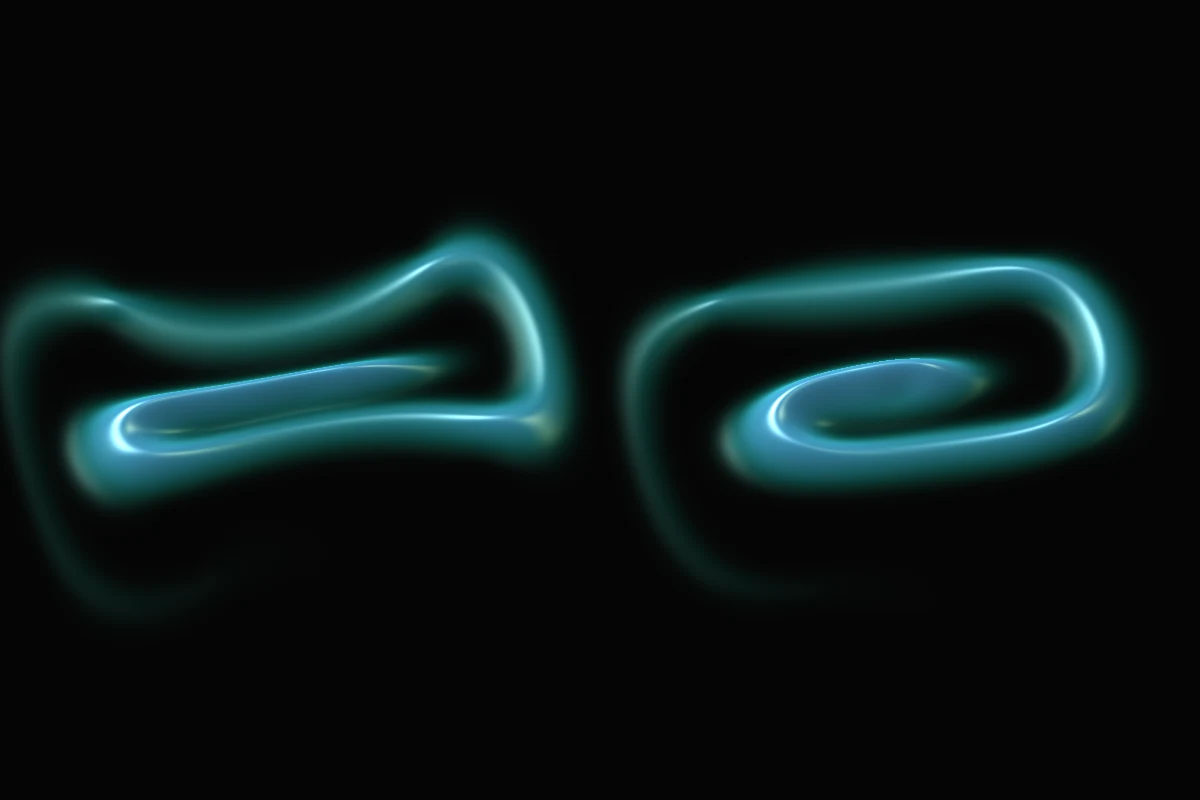
Actual 2D solver capture · qualification pending
The idea
Make a flow. Change one condition.
Same starting motion. One different condition. A side-by-side view makes the effect easier to see.
- 01
Make it move
A gesture is your starting point. The ink makes the movement visible.
- 02
Change one thing
Keep A as a reference. Choose one different condition for B.
- 03
See the difference
Follow the motion. Look closer at what changes, and what stays the same.
Four ways to explore
Look a little closer.
Open a question to explore the thinking behind each experiment.
Internal chapters · qualification pending01Make a FlowWhy does ink keep moving after I stop?
A gesture adds momentum. Ink reveals where that motion goes, and why it does not stop with your hand.
02Keep the SwirlHow does viscosity change this motion?
Viscosity smooths differences in velocity. Compare two matching starts with only viscosity changed.
03Shape the WakeHow does a boundary redirect flow?
Place a boundary in the flow’s path. Explore how it redirects motion while the starting conditions stay matched.
04Read the InvisibleWhat does each picture measure?
Ink reveals motion. Velocity shows direction and speed. Vorticity describes local rotation. Each view answers a different question.
The science
A clear model. Clear limits.
FLOW is designed as a two-dimensional incompressible model with passive dye. A finite grid cannot establish a three-dimensional singularity or verify an external proof claim.
Read the official mathematical problemRecorded preview
A recorded run. A closer look.
Play the example, explore the text guides, share a starting setup, or save an image with its model settings.